Skip to content

Wall Art

Compare POD wall art for print-on-demand sellers. Posters, canvas wraps, metal prints, framed prints, and more — with paper quality, finish options, and archival grade breakdowns.

39 products from 6 suppliers

Matte, glossy, and satin finish options available Standard to museum-grade archival quality tiers Framed and unframed display configurations Paper, canvas, metal, acrylic, and wood substrates Matte, glossy, and satin finish options available Standard to museum-grade archival quality tiers Framed and unframed display configurations Paper, canvas, metal, acrylic, and wood substrates Matte, glossy, and satin finish options available Standard to museum-grade archival quality tiers Framed and unframed display configurations Paper, canvas, metal, acrylic, and wood substrates

All wall art products

Use the product-type filters to narrow the grid, or browse everything below and compare suppliers as you go.

Supplier Coverage

6

Suppliers represented

Print Methods

DTG

Demographics

Unisex

Feature Availability

No feature tags available

About Wall Art

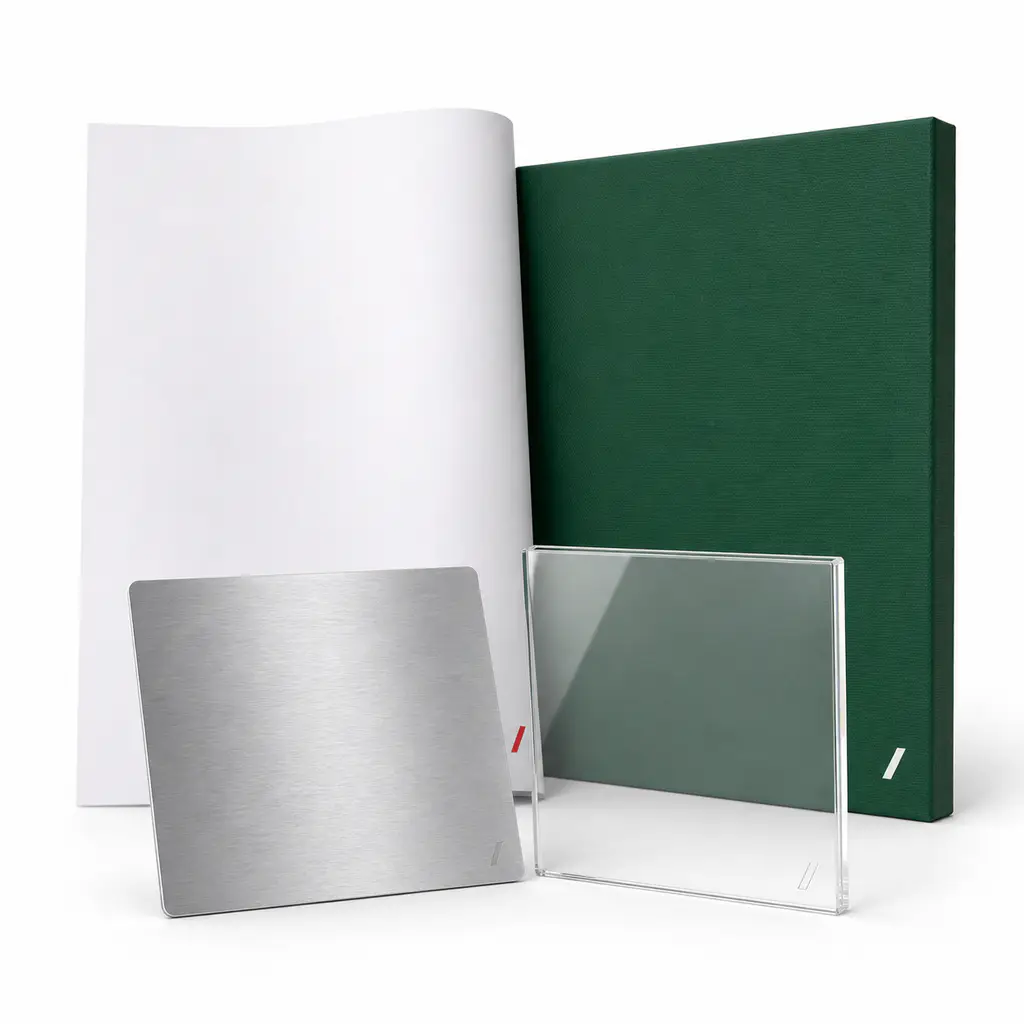
Wall art ranges from matte posters to gallery-grade canvas and metal prints. Each substrate produces a distinctly different look — paper posters suit high-throughput poster workflows; stretched canvas adds depth and texture; metal prints deliver vivid color saturation with a modern finish.

Finish (matte, glossy, satin) changes how light interacts with the print surface, affecting both color vibrancy and viewing environment. Archival grade matters for photography and fine art sellers who need long-term color stability. GSM paper weight tiers signal substrate thickness and rigidity — heavier stock feels more rigid and holds up better in unframed display.

Questions buyers ask

What GSM paper weight should I look for in POD wall art?
150–189 GSM is standard poster stock. 190–249 GSM adds rigidity and color depth. 250+ GSM is closer to fine-art paper weight.
How does matte vs glossy finish affect wall art prints?
Matte eliminates glare under direct lighting but mutes color vibrancy. Glossy maximizes saturation and contrast but reflects light. Satin balances both.
What does archival grade mean for POD wall art?
Archival-grade substrates resist UV fading and yellowing over decades. Standard grade suits decorative use. Museum grade is for fine art sellers who need long-term color accuracy.
Why do my wall art prints look different from my screen design?
Screens emit RGB light; prints use CMYK ink on a reflective surface. Glossy substrates get closest to screen vibrancy. Matte and textured substrates absorb more light, softening colors.
What DPI resolution do I need for wall art prints?
300 DPI at final print size is the standard for sharp output. Large posters viewed from distance can use 150 DPI. Canvas texture hides resolution loss better than smooth paper or metal.
How does substrate material affect color reproduction in wall art?
Paper absorbs ink for soft tones. Canvas texture diffuses detail. Metal reflects light through ink for luminosity. Acrylic refracts light for depth. The same file looks different on each.
What is the difference between canvas, metal, and acrylic wall art?
Canvas adds painterly texture on fabric over stretcher bars. Metal infuses dye into aluminum for vivid, waterproof panels. Acrylic prints through transparent plexiglass for a glowing depth effect.